FBR Digital Invoicing: The Complete 2026 Guide for Pakistani Businesses
FBR digital invoicing is now a fact of life for registered businesses in Pakistan. If you sell taxable goods or services, the Federal Board of Revenue expects your sales invoices to be generated, validated, and reported through its FBR digital invoicing system in real time. This guide explains what that means in plain language: who it applies to, how it works behind the scenes, and exactly what you need to do to stay compliant without slowing your business down.
What is FBR digital invoicing?
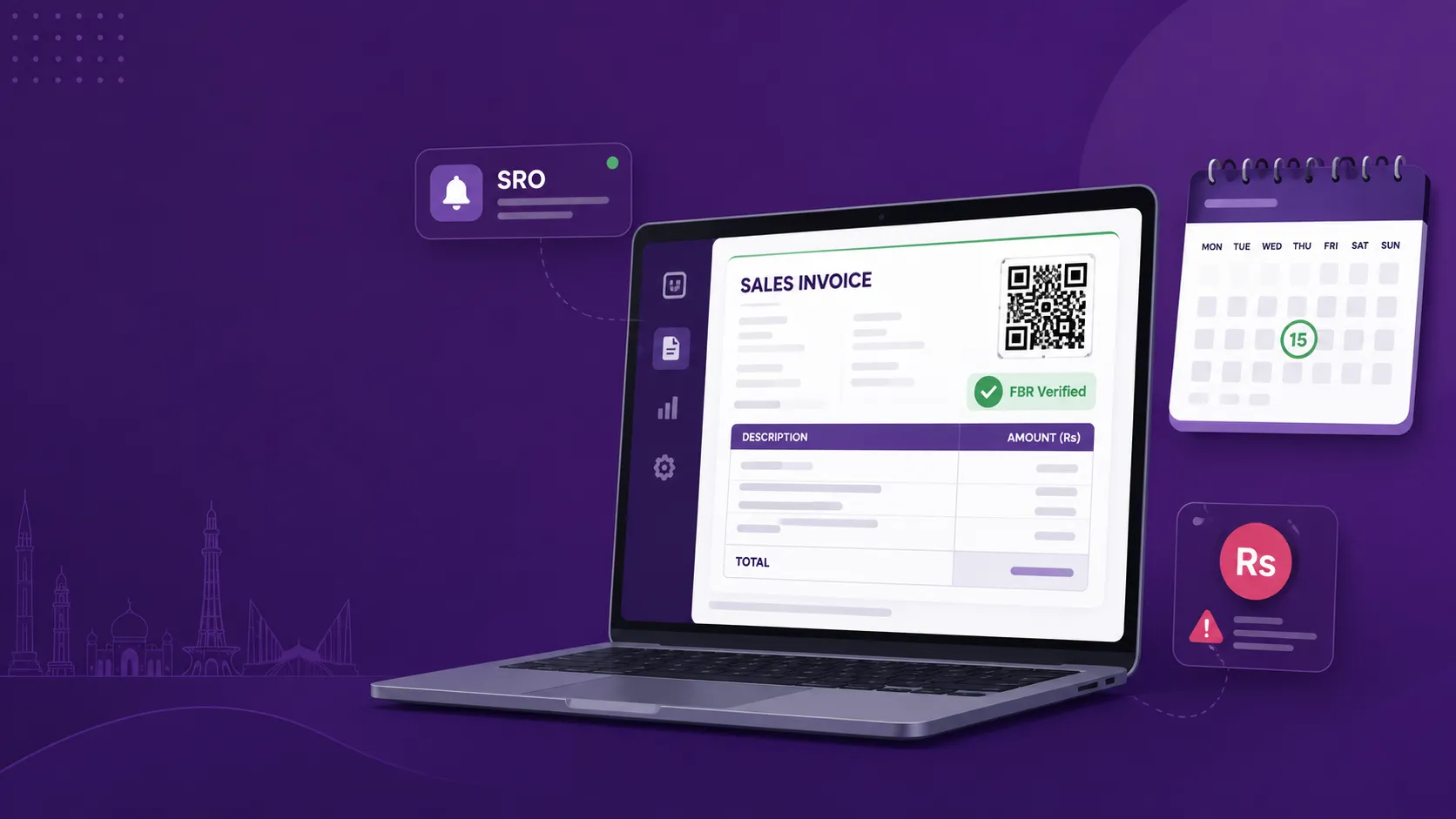
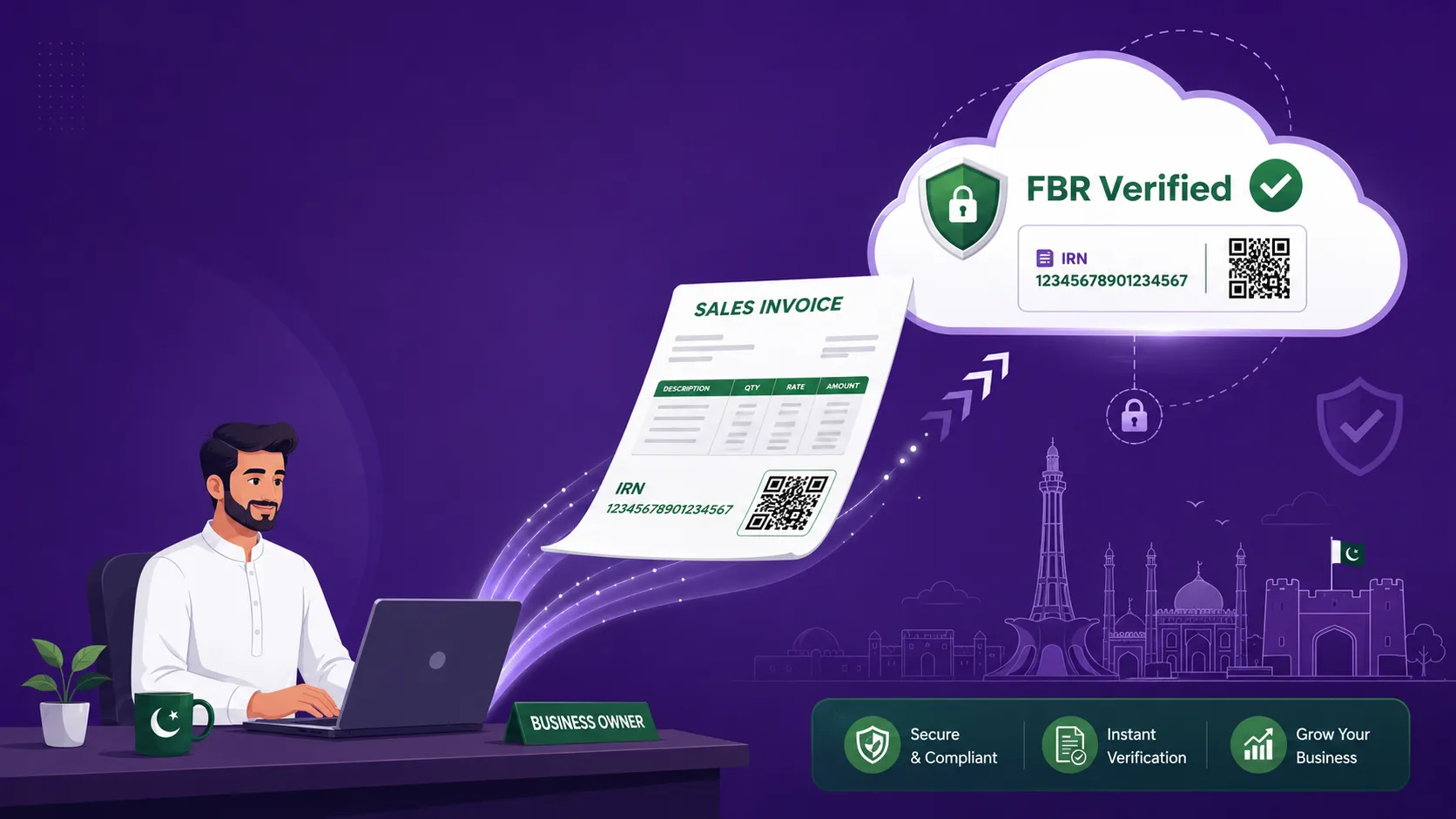
FBR digital invoicing (sometimes called FBR e-invoicing) is a system where every sales invoice you issue is submitted electronically to the FBR at the moment it is created. In return, FBR validates the invoice and stamps it with a unique Invoice Reference Number (IRN), a QR code, and identifiers your buyer can verify. The goal is a single, tamper-proof record of every transaction in the documented economy.
In practice this replaces the old habit of printing an invoice from a word processor or a disconnected POS. The invoice your customer receives now carries proof that FBR has already seen and approved it.
Who must comply with SRO 709(I)/2025?
SRO 709(I)/2025 is the notification that brings most sales-tax-registered businesses into the digital invoicing regime. While the rollout is phased by sector and turnover, the practical answer for most companies is: if you are registered for sales tax, assume you are in scope. Categories typically covered include:
- Manufacturers and producers
- Importers and commercial importers
- Wholesalers, dealers, and distributors
- Large retailers and chain stores
- Service providers registered for sales tax
Not sure if you're in scope?
Deadlines under SRO 709(I)/2025 are staggered by category. The safest position is to be ready before your sector's date rather than after: the cost of compliance is far lower than the cost of a penalty or a suspended STRN.
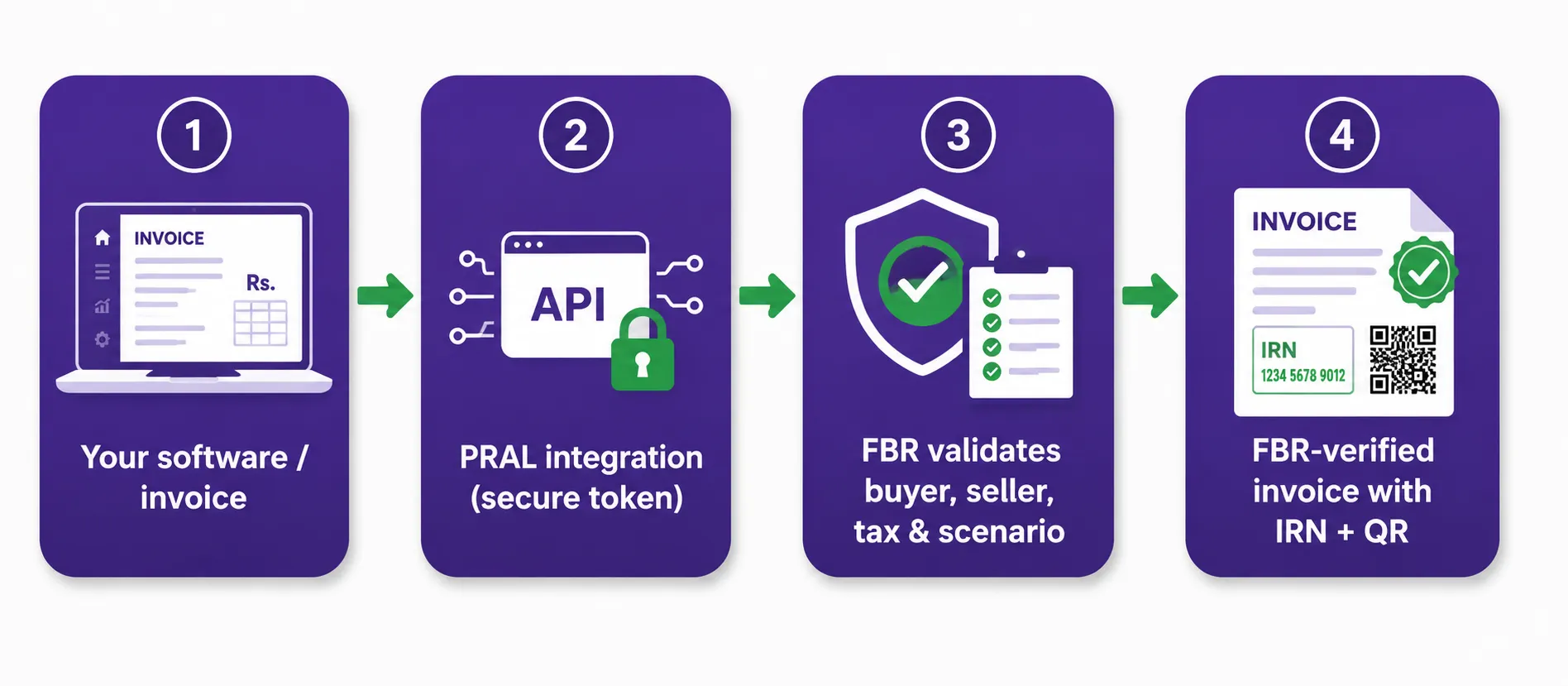
How real-time FBR digital invoicing works (PRAL & IRIS)
Two FBR systems sit behind the scenes. PRAL (Pakistan Revenue Automation Ltd) operates the technical integration layer, while IRIS is the FBR portal where your registration and returns live. A compliant invoicing system connects to both. Here is the round-trip for a single invoice:
- 1You create an invoice in your software and click submit.
- 2The invoice is sent to FBR through the PRAL integration using your authenticated token.
- 3FBR validates the buyer, seller, tax rate, and scenario, then returns an IRN and QR code.
- 4Your software prints the FBR-verified invoice, with IRN, QR, and USIN, for your customer.
Done well, this entire exchange happens in a second or two, so your team never feels the difference. Done badly, with manual portal entry, it becomes a daily bottleneck.
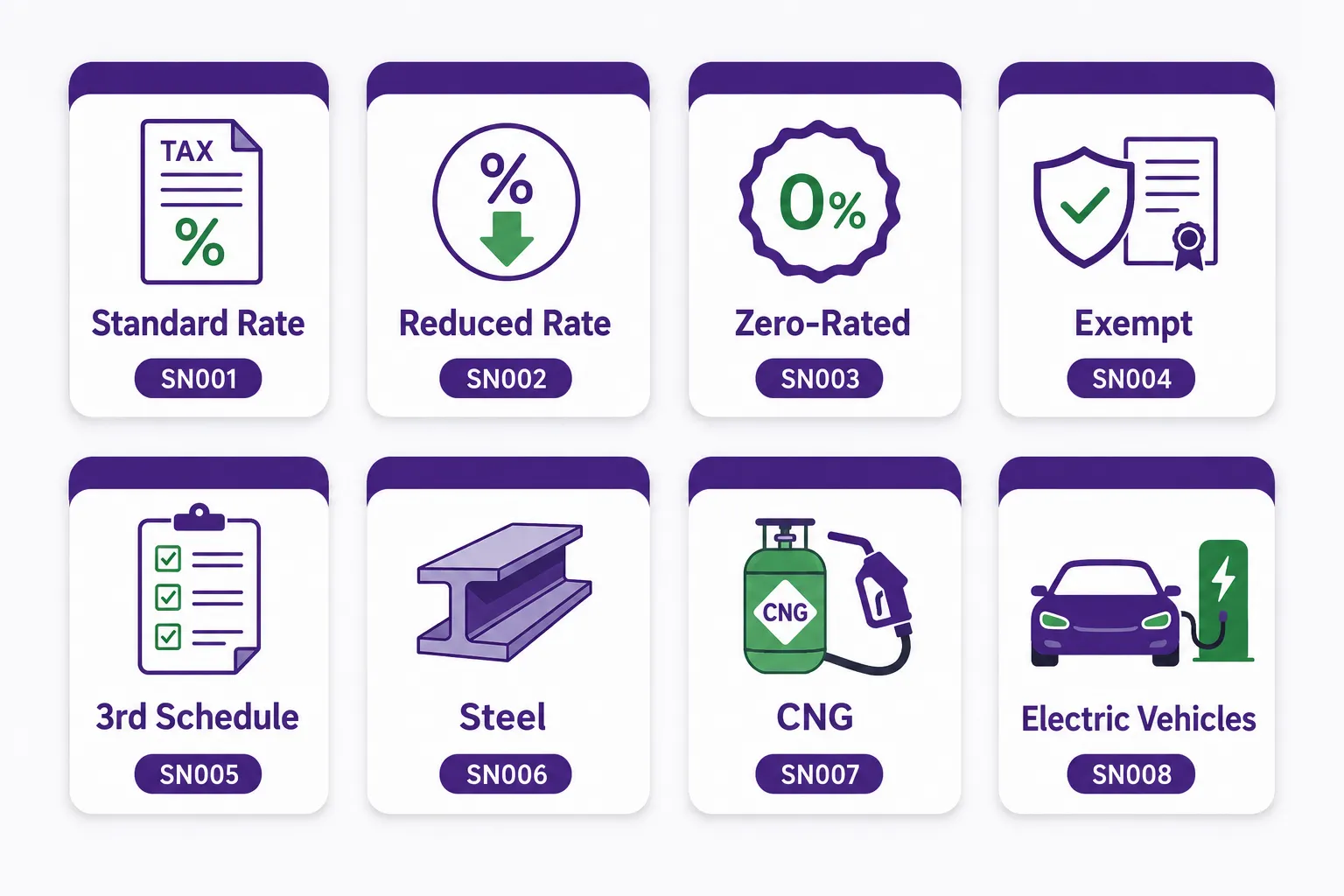
The 28 FBR invoice scenarios (SN001 to SN028)
FBR defines 28 invoice scenarios (SN001 to SN028) covering everything from Standard Rate and Reduced Rate to Zero-Rated, Exempt, 3rd Schedule, Steel, CNG, and Electric Vehicles. Choosing the wrong scenario means a rejected or incorrect invoice. Good software selects the right scenario automatically. See how TaxHub's FBR digital invoicing software handles all 28 scenarios.
From e-invoicing pilot to the 2026 baseline
The old model let businesses generate invoices in isolation and report sales later, in bulk. Since 2025 that gap is closed: SRO 709(I)/2025 made real-time submission mandatory for corporate and non-corporate registered persons, introduced the IRN and QR code on every compliant invoice, and standardised the invoice scenarios. In 2026, real-time validation is simply how registered businesses invoice.
The direction of travel is one-way
Every revision to Pakistan's tax framework points toward more documentation, not less. Treating digital invoicing as a temporary requirement is a mistake. It is the new baseline.
What happens if you don't comply
Non-compliance is expensive
Issuing invoices outside the FBR digital system can trigger penalties that run into hundreds of thousands of rupees, input-tax disallowance for your buyers, and in serious cases suspension of your Sales Tax Registration Number (STRN). For most businesses, a monthly software subscription is a rounding error next to that exposure.
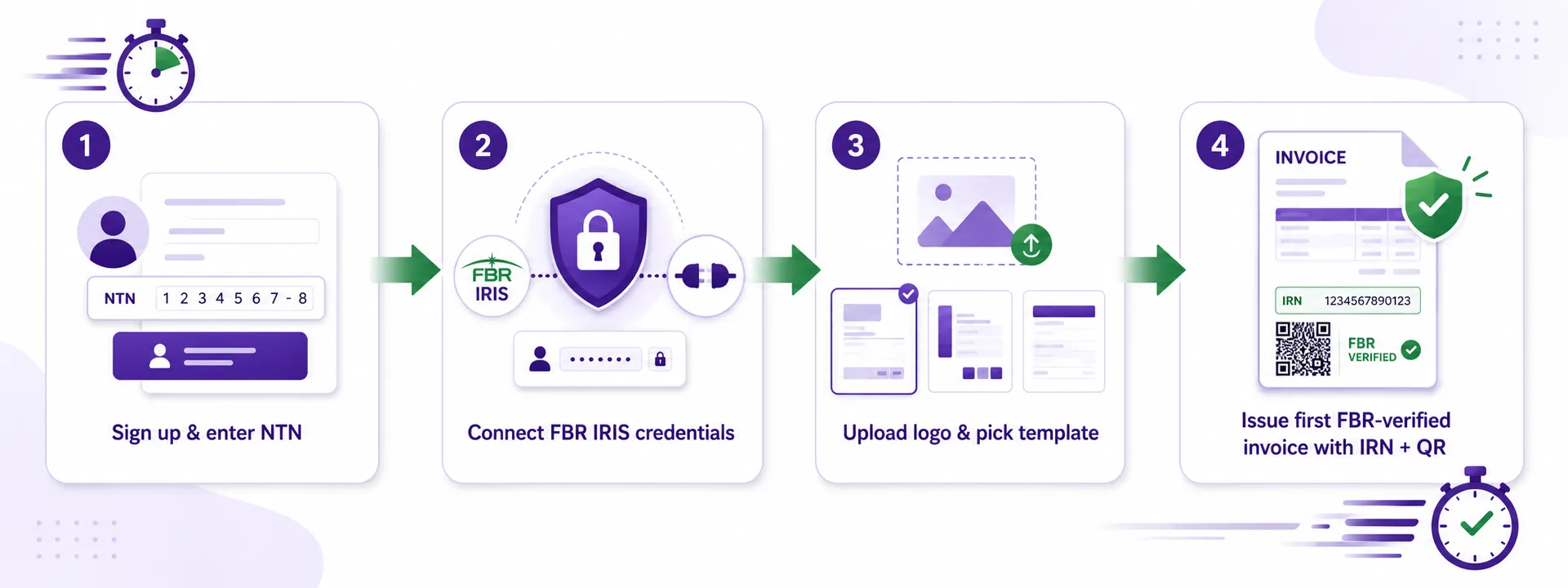
How to get compliant in under 10 minutes
- 1Sign up and enter your NTN.
- 2Connect your FBR IRIS credentials so the PRAL token is configured for you.
- 3Upload your logo and pick an invoice template.
- 4Issue your first FBR-verified invoice, IRN and QR included.
That is the whole point of modern tooling: the compliance complexity is handled for you. For the full legal timeline, read every SRO, deadline, and penalty explained, and check the FBR tax return deadlines for 2026 so nothing catches you off guard.
Try TaxHub free: get FBR compliant in 10 minutes
Real-time FBR digital invoicing, complete accounting, and a dashboard that's entirely yours. No credit card required.
Book Free Consultation